HarnessServer
HarnessServer runs in the Agent host environment, staging compiled Skills, SOPs, and Rules into Workspaces by role, and serving REST and MCP endpoints for runtime context on demand. In standalone deployment, REST and MCP-SSE run on the same HTTP port; conversation WebSockets are optional in standalone mode. It does not ingest enterprise knowledge directly; managerial memory is disabled by default and restricted to authorized Agents. Before global promotion, HarnessServer can replay candidate against baseline and write the conclusion as promotion-review evidence (when connected to LarkScout). It can operate standalone on local content or connect to LarkScout for upstream synchronization and search.


HarnessServer
Content Delivery for AgentsContext delivery and capability distribution component for Agent host environmentsStage Skills, SOPs, and context into Workspaces by role—preloaded or on-demand, configurable per Agent.
- Pre-Staged
- Main config and Skills ready in advance
- Role-Based
- coordinator / worker distribution
- REST + MCP
- Colocated on same port in standalone mode
Typical pains
- Each Workspace requires manual, error-prone configuration of prompts and tools
- Newly onboarded Agents waste cycles exploring the environment before becoming productive
- New Agent rollouts lack a standardized, repeatable onboarding pipeline
Core value
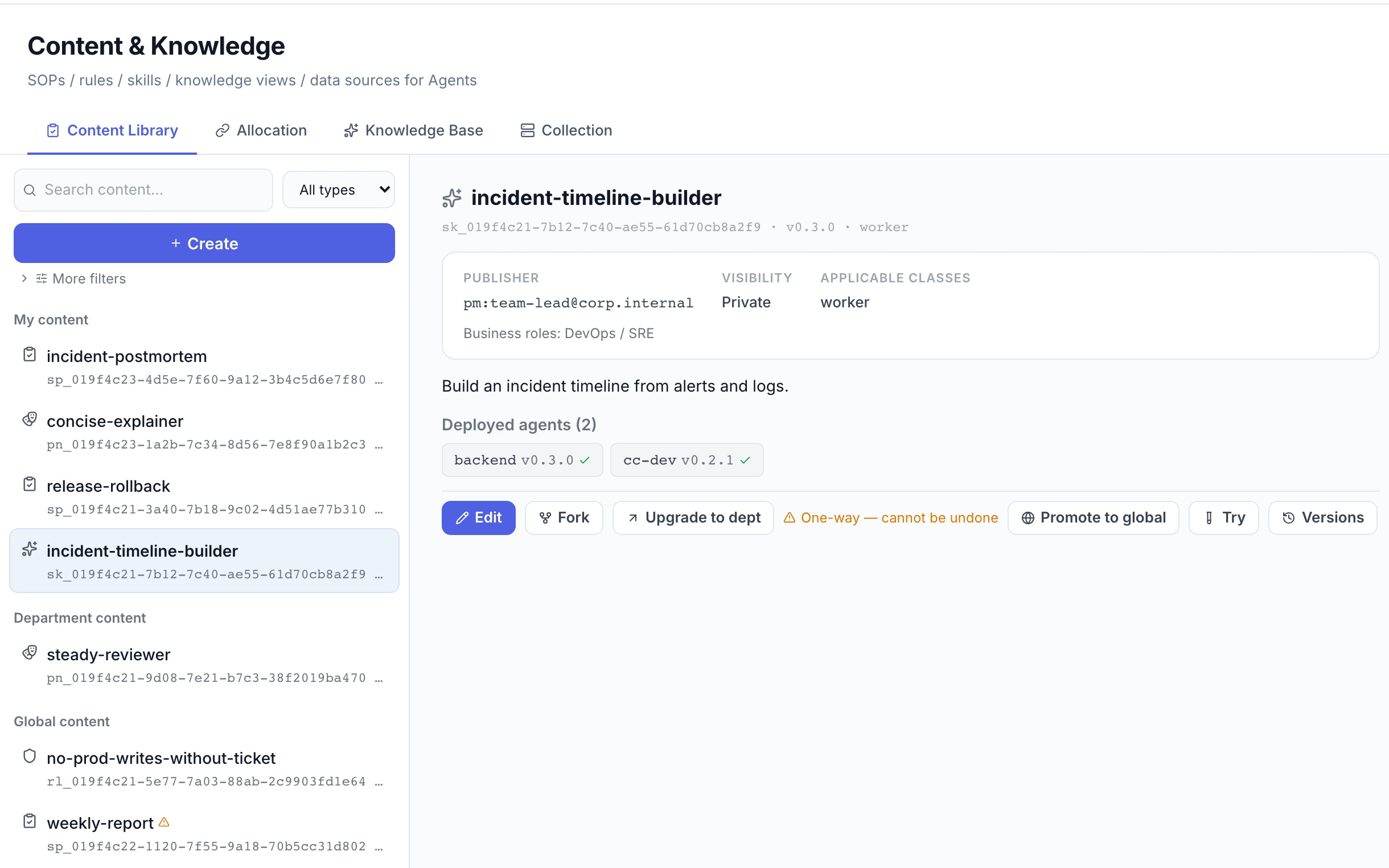
Which agents each skill is deployed to
Once a skill is approved, HarnessServer deploys it to the matching agents. The content detail panel in AULO shows which agents it is deployed to, and at which version.
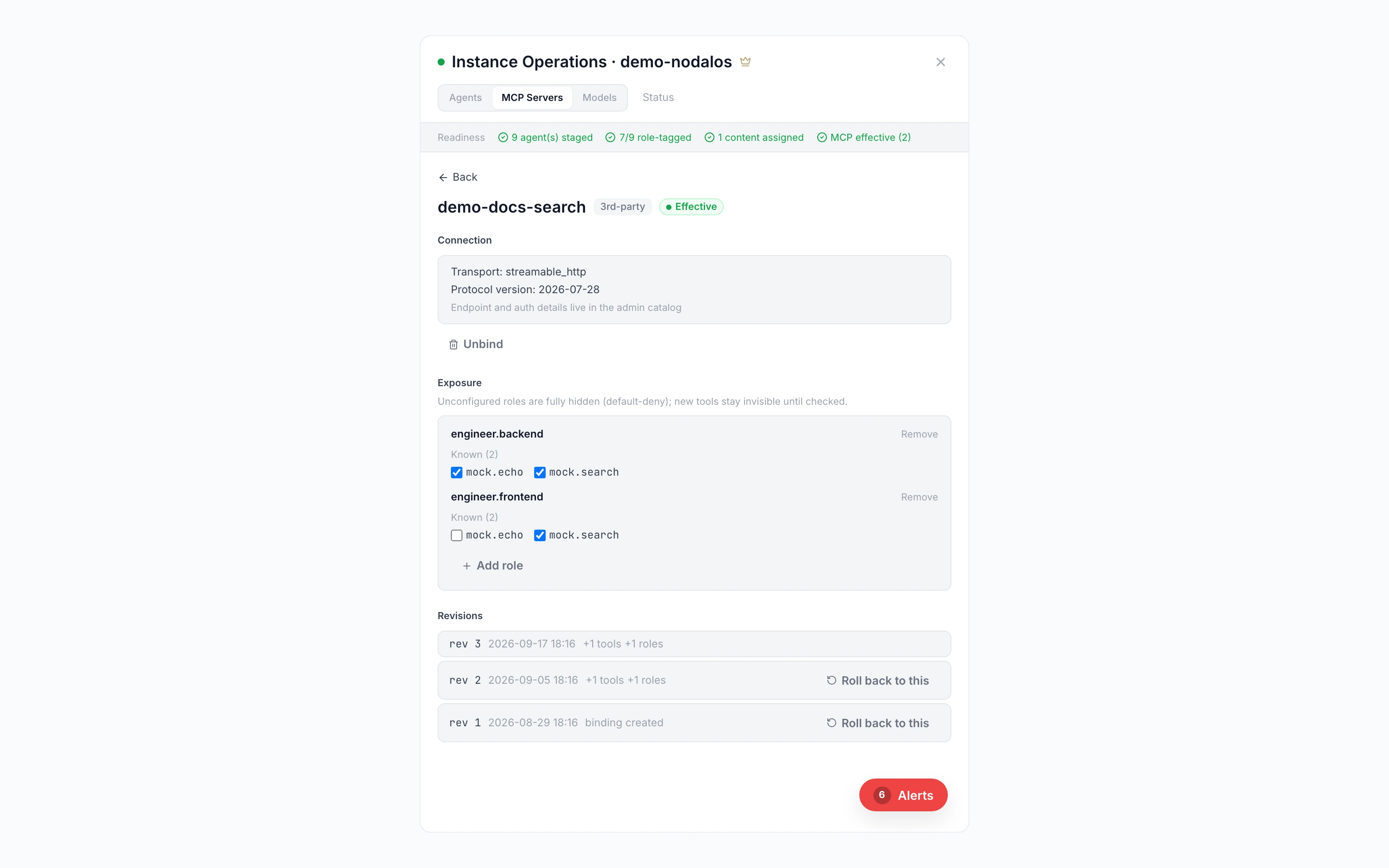
Role-based MCP exposure control
HarnessServer lets administrators configure tool visibility by role with unconfigured roles hidden by default (default-deny), generating versioned revisions with rollback support.
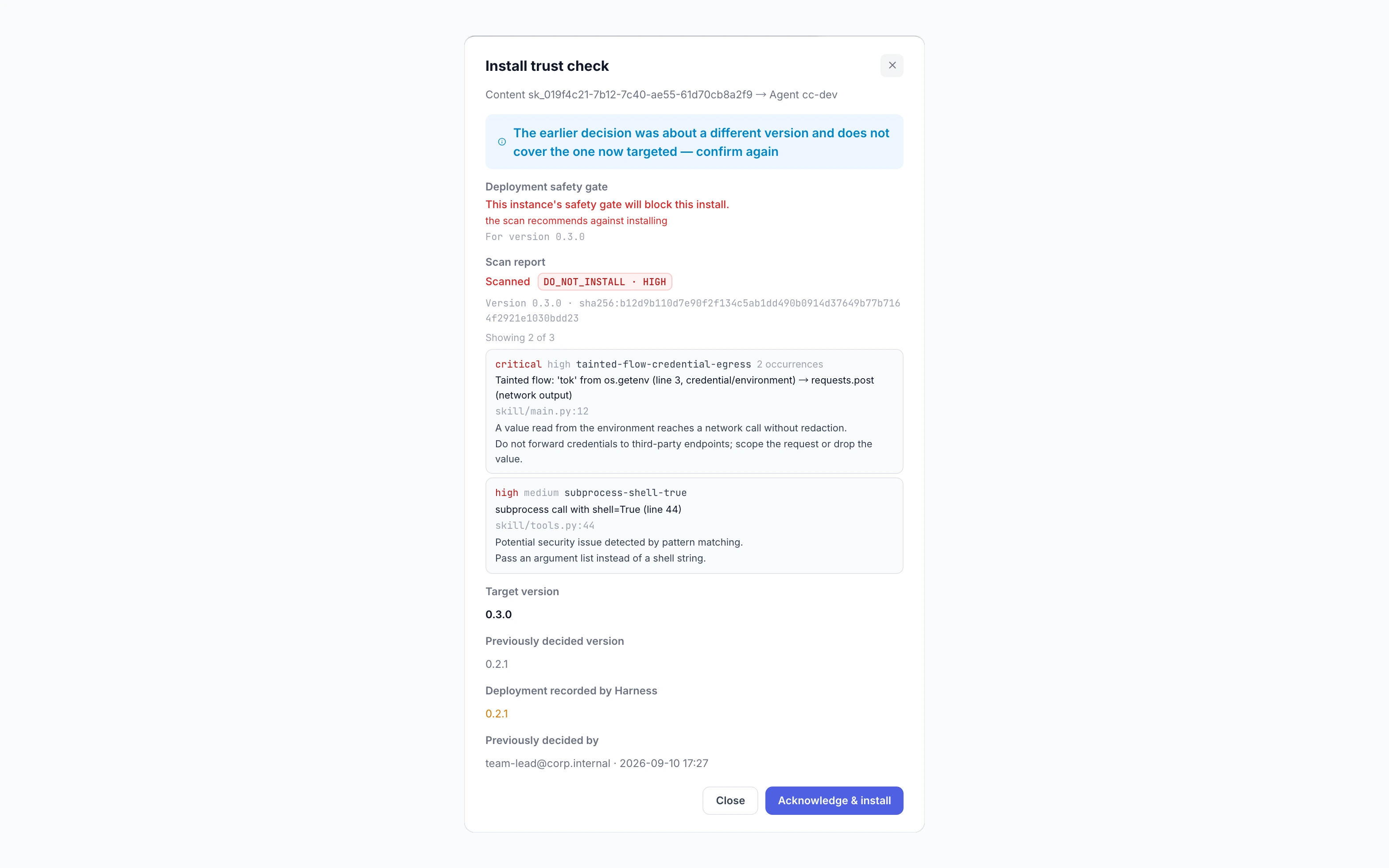
SkillScan deployment safety gate and static analysis
Enabled by default in fresh install configurations and configurable to disable, inactive when turned off; runs static scans before Skill deployment to identify dangerous patterns and taint flows down to source lines, allowing safety gates to block risky installs.
Capabilities
Context supply
Skill assembly & scanning
Deployment & integration
Provenance & evaluation
Does / does not
- Dual-side on-demand context injection: Workers pull task context indices; Coordinators fetch SOPs by name
- Role-based workspace pre-provisioning: approved Skills deploy automatically (including upgrades); SOP / Rule sync by permission
- SkillScan pre-deploy static analysis: enabled by default for new installs and configurable to disable, providing Python AST danger-pattern and dependency static scanning
- Context snapshot and Content Version provenance: versions stamped on traces for context-change audit
- Content-version evaluation runtime: candidate and baseline versions replay the same task batch in pairs; conclusions are recorded per content version and written to promotion-review evidence
- Framework context file generation: CLAUDE.md / AGENTS.md / NODAL.md
- Standalone and LarkScout integration: REST + MCP on its own, or connected to the LarkScout knowledge base
- Per-Agent content assembly: Rules can be always loaded, optional, or left out of the catalog (still fetchable by name), and SOPs optional or left out; expected vs. actual tiers can be checked
- Does not ingest raw documents or compile knowledge (upstream Claim compilation is LarkScout)
- Does not provide an unauthenticated global shared memory pool (bitemporal managerial memory is isolated and authorized-Agents-only)
- Does not manage OS-level process sandboxes (container and syscall controls belong to NodalOS)
- Does not produce a platform-wide score or Agent ranking (evaluation conclusions and performance aggregates appear only in AULO panels and are never written into Agent-visible files)
By role
Standardizes Agent onboarding, shifting Workspaces from manual scripting to role-based pre-staging and on-demand retrieval
Managerial memory is disabled by default and strictly isolated to authorized Agents
Bridges the final mile between knowledge compilation and execution, eliminating Agent onboarding guesswork